




{{ variable.name }} : {{ variable.values[selectedVariantsIndex[variable_index]].name }}
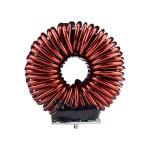
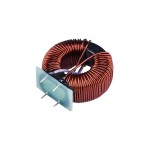
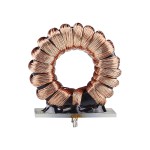
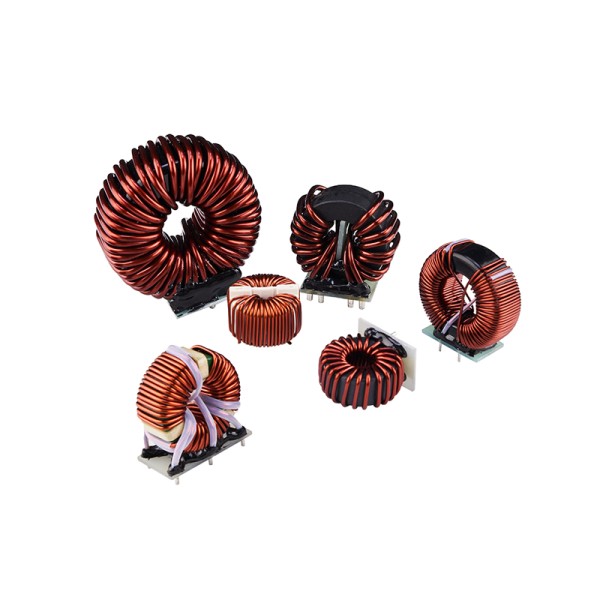
环形电感器因环形磁芯结构带来独特的电磁特性,在电源滤波、信号处理、功率转换等场景中广泛应用,
环形电感的优势源于闭合磁路设计(磁芯呈环形,绕组均匀绕制于外周),相比传统工字电感、贴片电感,在磁效率、损耗控制、空间利用率上有显著差异:
1. 磁效率高,漏磁极小
磁路闭合无气隙:环形磁芯的磁路完全闭合(无传统电感的 “磁芯缺口”),磁力线几乎全部约束在磁芯内部,漏磁系数通常<5%(传统工字电感漏磁系数可达 20%-30%),对周边电路的电磁干扰(EMI)大幅降低。
示例:在开关电源中,环形电感的漏磁干扰比同功率工字电感低 15-20dB,可减少对周边芯片(如 MCU)的信号干扰。
2. 功率损耗低,效率优异(铜损 + 铁损双低)
绕组均匀绕制于环形磁芯,导线长度更短(比同感值工字电感减少 10%-15%),直流电阻更低,铜损显著降低,磁芯采用高频低损耗材料(如铁硅铝、纳米晶、高频铁氧体),在 10kHz-1MHz 高频段,铁损(磁滞损耗+涡流损耗)比传统磁芯低 20%-30%。
3. 功率密度高,体积紧凑
相同功率 / 感值下,环形电感的体积比传统电感缩小 20%-40%,重量减轻 30%-50%。
4. 参数稳定,抗干扰能力强
感值线性度好:在1.5倍额定电流范围内,感值偏差通常<±5%(传统电感可能达±10%),尤其适合对感值精度要求高的滤波场景(如光伏逆变器直流侧平波)。抗振动与温度稳定性优:环形结构无 “磁芯松动” 风险,工作温度范围宽(-55℃~+125℃,部分工业级可达 + 155℃)
5. 设计灵活,适配多场景
可通过调整磁芯材质(铁粉芯→铁硅铝→纳米晶,适配不同频率 / 损耗需求)、绕组线径(0.1mm-2.0mm,匹配 0.1A-50A 电流)、匝数(10 匝 - 1000 匝,实现 1nH-10mH 感值)定制,支持单绕组(差模)、双绕组(共模)设计,兼顾差模滤波、共模抑制、能量存储等多种功能。
环形电感在电路中主要承担 “滤波”“储能”“信号隔离” 三大核心作用,具体应用场景与功能对应如下:
1. 电源滤波:抑制噪声,稳定电压
通过 “阻碍特定频率电流” 实现噪声过滤,分为差模滤波和共模滤波两类:
▶ 差模滤波(单绕组设计):对线路中 “反向传输的差模噪声”(如负载突变产生的尖峰电流、电网杂波)形成高阻抗,仅允许工频 / 直流信号通过。应用场景:开关电源输入 / 输出端(如 LED 驱动电源、笔记本充电器)、工业变频器直流侧,减少纹波电压(如将输出纹波从 200mV 降至 50mV 以下)。
▶ 共模滤波(双绕组反向绕制):对线路中 “同向传输的共模噪声”(如地线干扰、电磁辐射耦合噪声)形成高阻抗,不影响正常差模信号。应用场景:家电(空调、洗衣机)电源入口、医疗设备(监护仪、超声仪)供电回路,符合 EMC 认证(如 CE、FCC)对共模干扰的限值要求。
2. 能量存储:暂存电能,平滑功率
在开关电源、DC-DC 转换器中,环形电感作为 “能量存储元件”,配合电容实现 “电能的充放电缓冲”,避免功率波动影响电路稳定:
▶ 原理:开关管导通时,电感存储电能(电流线性上升);开关管关断时,电感释放电能(通过续流二极管给负载供电),实现功率平滑传输。
▶ 应用场景:车载 DC-DC 模块(12V 转 5V):用 100μH 环形电感存储电能,避免汽车电瓶电压波动(9V-16V)导致输出电压不稳;光伏逆变器:用 1mH 环形电感作为储能元件,匹配光伏板输出电流的间歇性,确保并网功率稳定。
3. 信号处理:隔离与阻抗匹配
在高频信号电路中,环形电感通过 “电磁感应” 实现信号隔离或阻抗匹配,减少信号失真:
▶ 信号隔离(双绕组设计):利用绕组间的互感传递信号,实现一次侧与二次侧的电气隔离,避免地电位差导致的信号干扰。应用场景:工业传感器(如压力传感器、温度传感器)信号传输,隔离工控系统与传感器的地回路,提升信号采集精度。
▶ 阻抗匹配:环形电感的高 Q 值(品质因数,高频下可达 50-100)使其适合射频电路(如 5G 基站、无线通信模块),通过调整感值匹配传输线阻抗(如 50Ω、75Ω),减少信号反射,提升传输效率。
4. 限流与保护:抑制冲击电流
在大功率设备启动时,环形电感可通过 “电感电流不能突变” 的特性,限制启动冲击电流,保护电路元件:
▶ 应用场景:电机启动回路:在三相异步电机启动端串联环形电感,将启动电流从额定电流的 5-7 倍降至 2-3 倍,避免烧毁接触器;
▶ 电容充电回路:在大功率电容充电电路中串联环形电感,抑制充电瞬间的尖峰电流,保护整流桥。
我们的电抗器广泛应用于所有需要提升电能质量和驱动保护的工业领域:
▶ 工业自动化:数控机床(CNC)、工业机器人、传送带系统的变频器(VFD)输入/输出端。
▶ 电力补偿:与电容器串联,用于无功补偿柜(SVG/SVC)中,组成调谐滤波回路,防止谐波放大。
▶ 重工业领域:起重设备、冶金轧机、矿山破碎机、大型风机水泵等大功率、高负荷动力系统。
▶ 新能源:光伏逆变站、风力发电变流系统,用于平滑输出电流,满足并网要求。
▶ 基础设施:中央空调、电梯、水泵等楼宇自控系统,保障公共设施稳定运行。